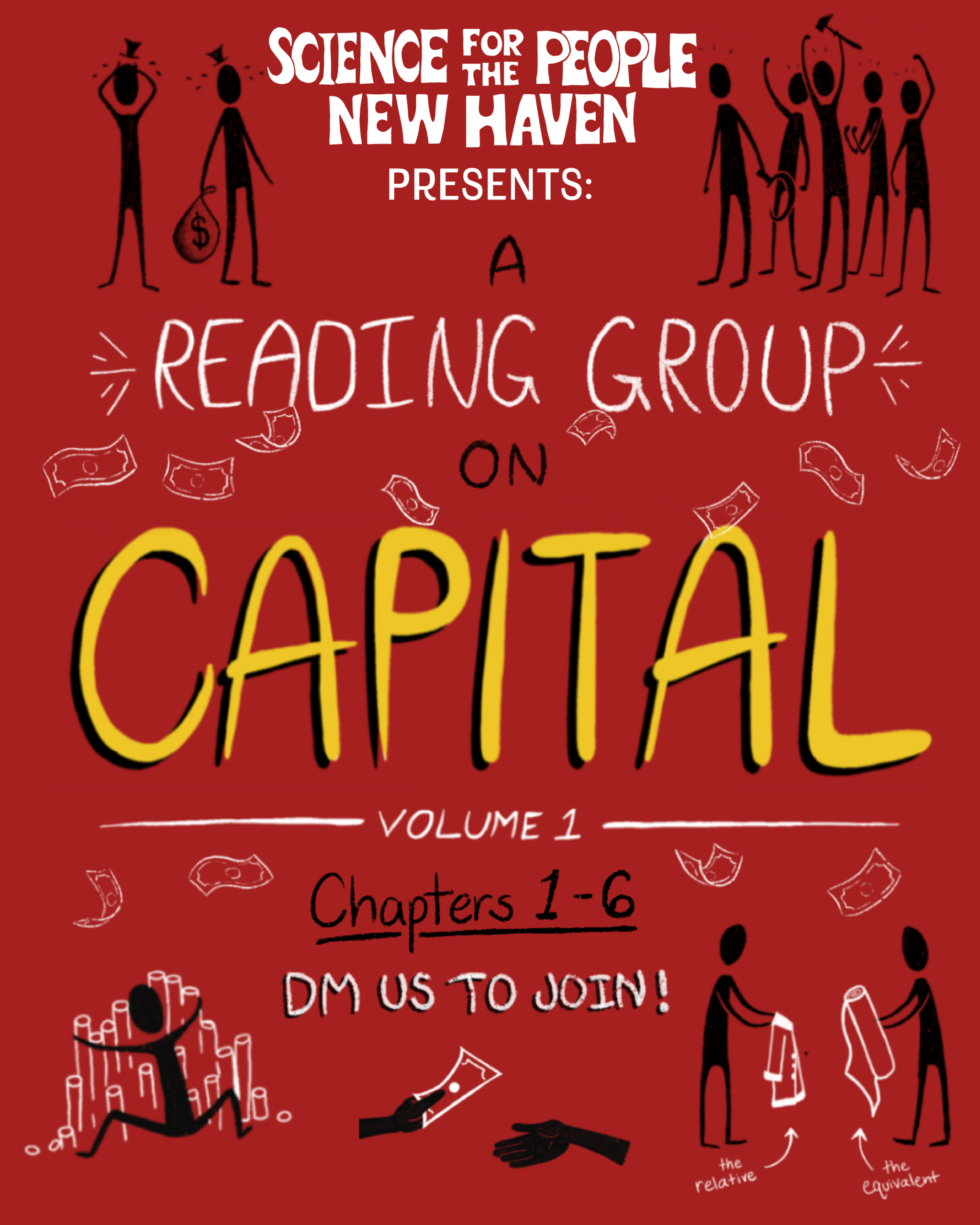
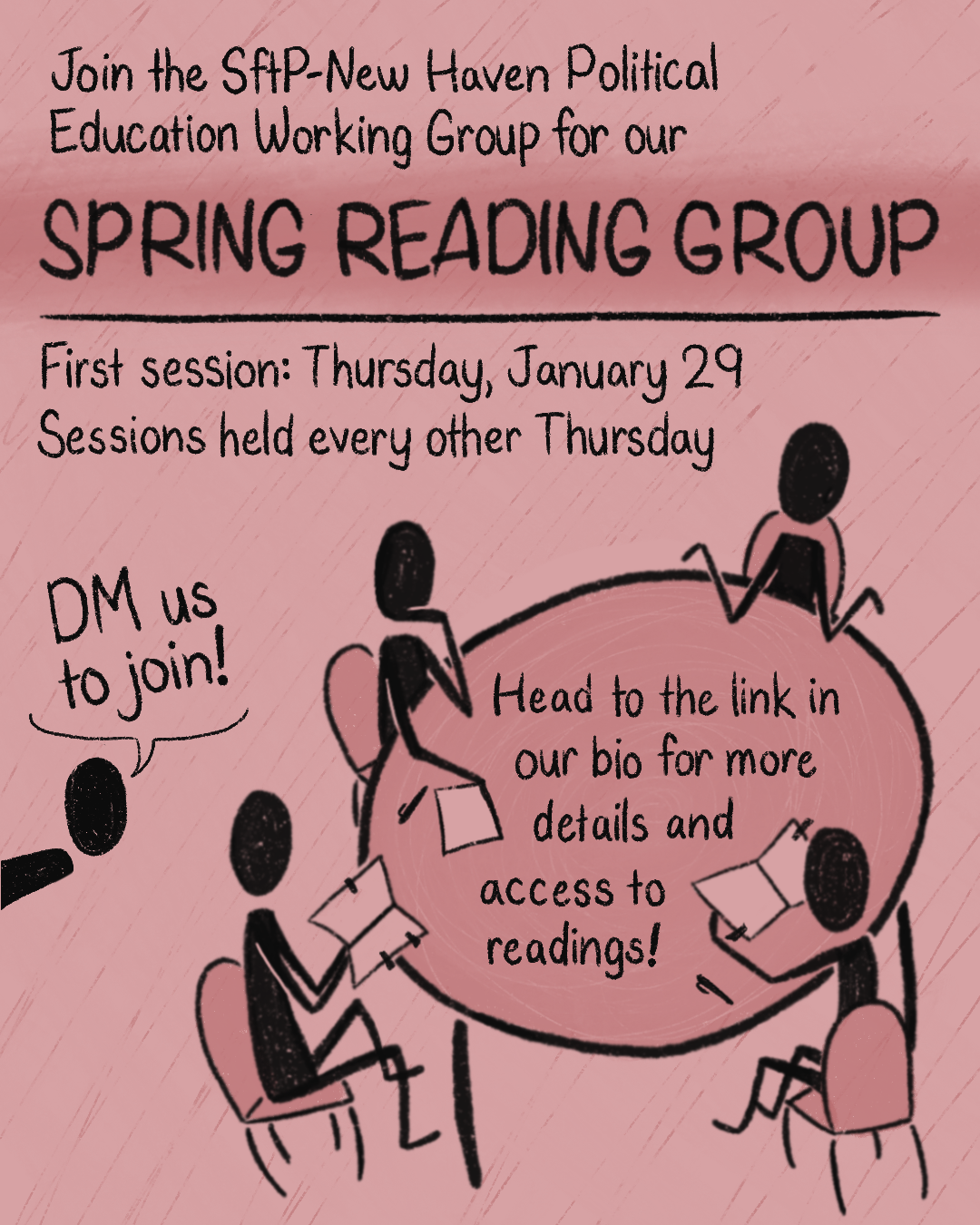
The Political Education working group ran a reading group series on volume 1 of Capital. We read the first six chapters over a series of biweekly meetings.
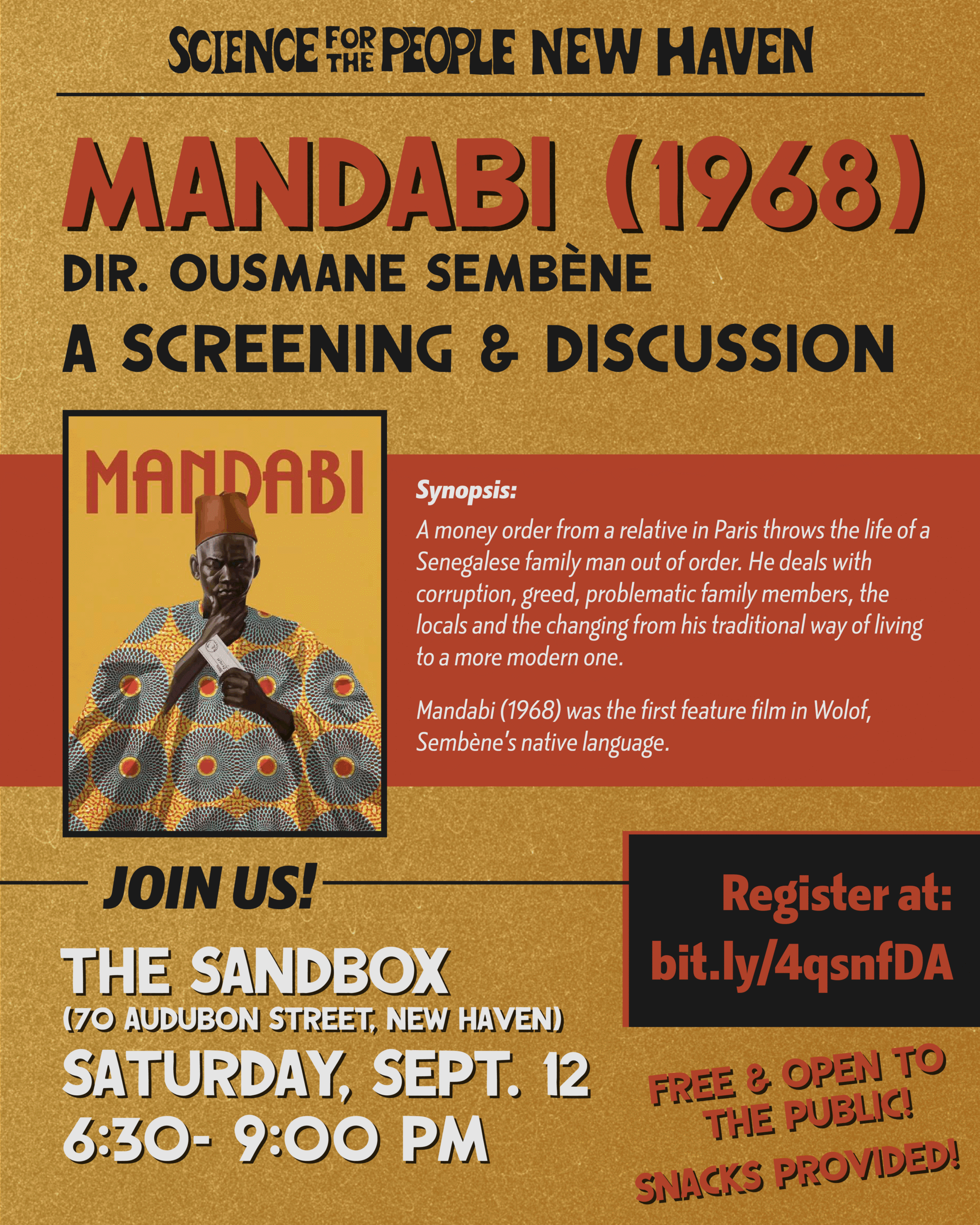
Join us September 12 at 6:30pm at the Sandbox (70 Audubon Street, New Haven) for a screening of Ousmane Sembène’s classic rise-and-fall tale dissecting colonialism and poverty from an angle not many films show. The film will be proceeded by a 30-minute discussion about its themes!
All are welcome to join us for this free public event. Snacks will be provided!
Film synopsis: A money order from a relative in Paris throws the life of a Senegalese family man out of order. He deals with corruption, greed, problematic family members, the locals and the changing from his traditional way of living to a more modern one.
Foraging is, for many, an increasingly popular hobby done with friends, family, and local foraging clubs. For many others, foraging has long been a cultural tradition, a strategy for survival, and even a method of resistance.
In October 2025, we in Science for the People – New Haven ran a teach-in event focusing on the political landscape of foraging, combining a foraging walk with discussions on the ways in which the practice of foraging has always been political.
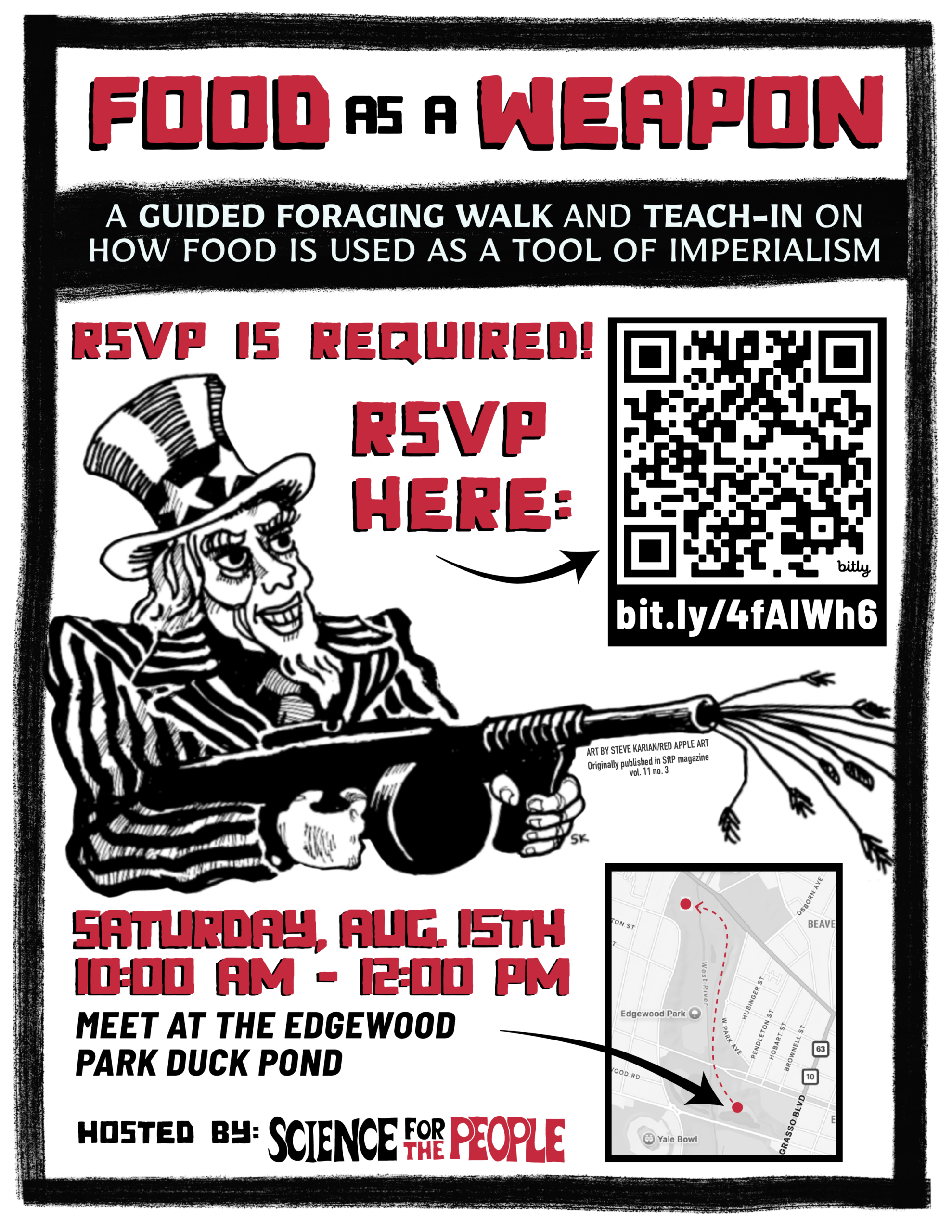
We are pleased to present the sequel event, which will focus on how food is used as a weapon in the context of imperialist ambitions. While we go on another foraging walk in our local New Haven neighbourhoods, we will ask questions like: What were the foraging and farming practices of the Indigenous peoples of CT, and how were they affected by the inherent settler-colonialism in the founding of the United States? How is starvation used as a deliberate tactic in wars and imperialist aggression, from Cuba to Palestine? What were the intentional, human-made causes of the Bengal famine? How are monoculture and seed cultivation practices used to exert economic and agricultural control over the Global South?
Join us for this combined discussion and guided walk event to explore these topics and our local environments!
In preparation for this event, we ask that all attendees review the resources linked below and engage in-depth with the first resource [#1] * and * at least two of the remaining six resources [#2 – #7]. The written resources relate to our topic of food being used as a weapon of war and imperialism, and our discussion will be guided by these.
We will be meeting at the Duck Pond (also called Edgewood Park Pond) in Edgewood Park and ending at the gazebo (where the CitySeed farmer’s market is held). The event will involve about an hour of walking over a one-mile trail. Please dress in appropriate walking shoes, bring water and a cap for the Sun if you need, and be mindful of the weather!
Resources
[1] From Indigenous Foodways to the “Trail of Tears” Reconnecting with Mother Earth: Foraging with Indigenous Values – NATIFS Some initial questions: a) What is your approach to foraging – do you have or take the time to observe and study nature? b) Are you using identification apps? Are they helpful for you? Do you think they bring you closer to nature or keep you connected to technology?
[2] Hunger on the Trail of Tears https://www.nobelpeacecenter.org/en/news/hunger-on-the-trail-of-tears Summary: The Trail of Tears, in the 1830s, was a significant event in United States governments’ policy of extermination and starvation of the Indigenous Peoples of Turtle Island. Forced starvation and controlling food resources played a central part in this policy. Destruction of crops and food stores was used by European settlers to drive Indigenous tribes in the East to newly allocated areas in the West. U.S. leaders also found it easier to kill bison, an important food source for numerous tribes, than wage all-out war against Indigenous Peoples. In this manner, control of food and starvation were important aspects of the settler-colonial practices carried out during and after the founding of the U.S. that were aimed at the genocide of Native Americans.
[3] Cuba: sanctions to punish the population Memorandum From the Deputy Assistant Secretary of State for Inter-American Affairs (Mallory) to the Assistant Secretary of State for Inter-American Affairs (Rubottom) https://history.state.gov/historicaldocuments/frus1958-60v06/d499 Summary: This memo, officially declassified in 1991, was written in 1960 by then-Deputy Assistant Secretary of State for Inter-American Affairs, Lester Mallory, imploring that “every possible means should be undertaken promptly to weaken the economic life of Cuba”, including inducing starvation among the population, in order to undermine the revolutionary communist government. The United States instituted an embargo on Cuba the following year, which continues to this day.
[4] How British colonizers caused the Bengal famine https://newint.org/features/2021/12/07/feature-how-british-colonizers-caused-bengal-famine Summary: Britain for a long time claimed that the 1943 famine in Bengal was an unavoidable natural disaster, but researchers today agree that it was human-made, and war-time inflation made food inaccessible to millions of people in Bengal — leading to 3million+ deaths and many more being pushed deeper into poverty. Utsa Patnaik (Indian marxist economist) has suggested that the war-time inflation was a deliberate policy designed by John Maynard Keynes and Winston Churchill, to deprive Bengalis living in poverty of resources and transfer them to British/US troops and support WWII activities.
[5] The New “Green Revolution” for Africa: A Revolution for Farmers, or for Corporate Profits? https://magazine.scienceforthepeople.org/vol25-1-the-soil-and-worker/the-new-green-revolution-for-africa/ Summary: This article discusses the impact of the Gates Foundation and the Alliance for a Green Revolution in Africa (AGRA), a non-profit founded by the Gates and Rockefeller Foundations, on food sovereignty, agricultural systems, and small farmers and in Africa. AGRA claims to seek a “transformation” of African agriculture through a “green revolution”, but in reality, the article argues, this takes the form of nothing more than a forced industrialization of African agriculture in order to “open up new markets for industrial and chemical-intensive agriculture in Africa.” Meanwhile the Gates Foundation and other philanthropic institutions ensure that decision making and sovereignty remain out of the hands of African farmers and guided by corporate and imperial desires instead. This article includes an interview with Daniel Maingi, Programs Manager at Growth Partners Africa and Coordinator of the Kenya Food Rights Alliance.
[6] Gaza: evidence points to Israel’s continued use of starvation to inflict genocide against Palestinians https://www.amnesty.org/en/latest/news/2025/07/gaza-evidence-points-to-israels-continued-use-of-starvation-to-inflict-genocide-against-palestinians/ Summary: By continuing to prevent UN and other key humanitarian organizations from distributing certain essential items, like food parcels, fuel and shelter, within Gaza and by maintaining a deadly, dehumanizing and ineffective militarized ‘aid’ scheme, Israeli authorities have turned aid-seeking into a booby trap for desperate starved Palestinians. They have also deliberately fueled chaos and compounded suffering instead of alleviating it. The aid delivered is also way below the humanitarian needs of a population that has been experiencing almost daily bombings.
[7] Excerpts from After Hunger: In Conversation with Sean Sherman Link to excerpts from the article Summary: Sean Sherman, “The Sioux Chef,” describes how colonization devalued complex local knowledge systems and destroyed complex local food systems and connects educational sovereignty to food sovereignty. Sherman observes that hunger and ill health are endemic features of colonialism and the globalized, commodified food systems that have emerged out of Western imperialism. For Sherman, learning from the past and building on foundations of local indigenous knowledge systems, and the food traditions of peoples who “held a strong sense of the wild plants where they lived, utilizing nature’s botanical components—trees, roots, flowers, fruits, seaweeds,” offers a pathway forward to a vision of better individual, societal, and planetary health.
—————
Additional recommended reading (optional) for context local to New England: [1] Indians 201: Aboriginal farming in New England – Daily Kos Summary: Foraging was an important part of the indigenous diet, in addition a lot of agriculture was done that often evaded the eyes of the European settlers [2] The Pilgrims Had No Idea How to Farm Here. Luckily, They Had the Native Americans – Modern Farmer Summary: The “Pilgrims” would not have survived if the local indigenous people of the Wampanoag wouldn’t have helped them by introducing them to local foods that grow in the coastal soil. Indigenous techniques of using plants that support each other and ash and fish as fertilizer was the basis for the survival of people in this region.
The Political Education working group will be running a reading group this spring. The reading group format will be focused on taking turns facilitating and picking readings; any who join will be welcome to facilitate a session (but are not required to). The session will run for an hour and a half and be accessible on Zoom. Anyone local to the New Haven chapter area is welcome to join us!
If you are interested in joining this or future sessions, please email nhv@scienceforthepeople.org for the location details and/or zoom link!
Past Sessions and Readings
Session 1: The Second Sex by Simone de Beauvoir, Introduction
One of the ruling modes of capital accumulation and political consolidation in New Haven, CT is the biotechnology industry. This document provides insights into some of the ways that this city has been reshaped by local, national, and international political and economic forces in the image of this industry. It serves as an overview of the way that power is organized and wielded in the city.
Reach out to nhv@scienceforthepeople.org if you have questions or materials that might be relevant to developing our understanding of the industry further.
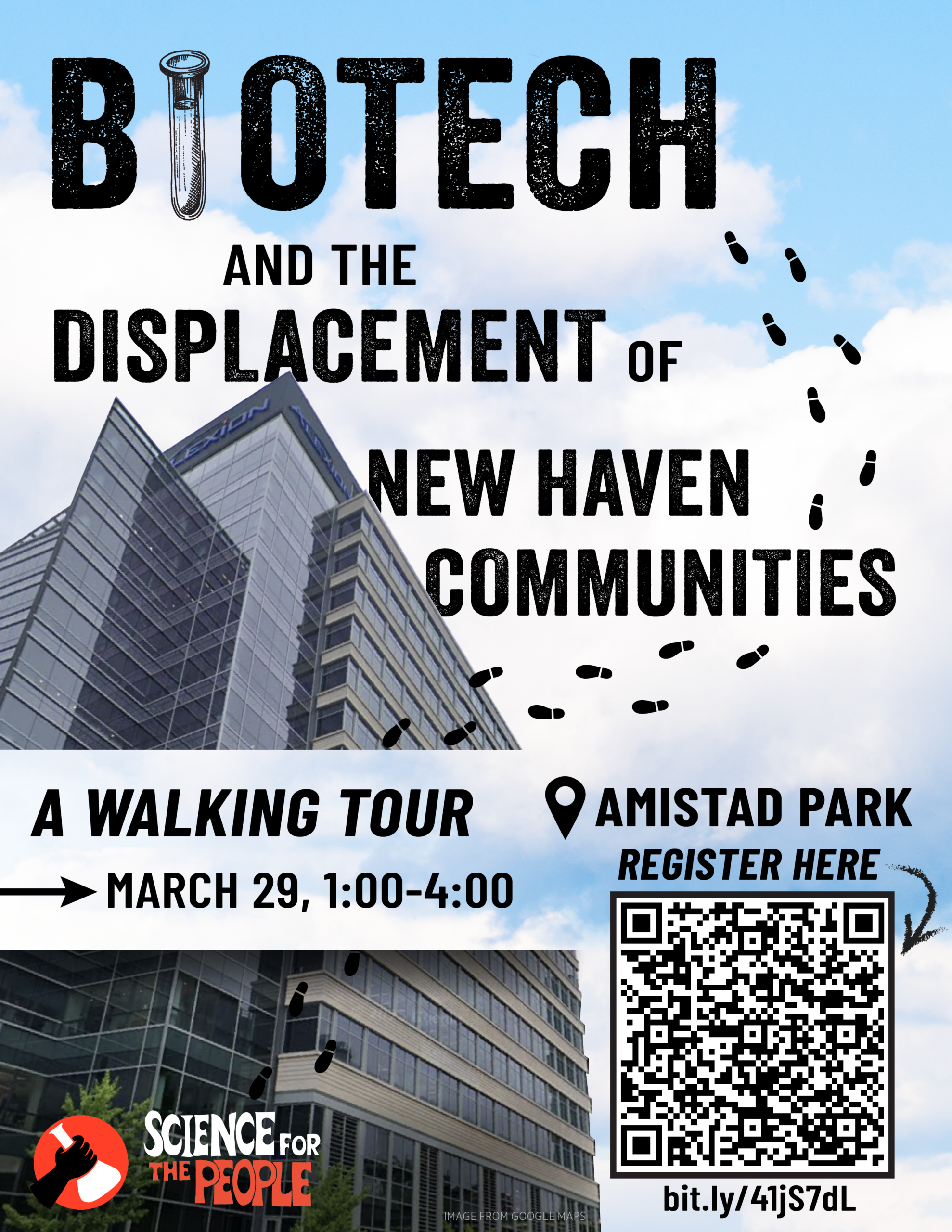
Join us on a walking tour as we learn about and encounter the way that the building of the biotech sector in New Haven in link to the destruction of the lives and livelihood of many people in the the city. Just us as we witness how local real estate interests, finance capital, and Yale university have come together to shape the making of the city.
We will start walking at 1:10, so please arrive on time!
This statement was originally posted on the main Science for the People website by the SftP Steering Committee and is reproduced here.
In its monstrous assault upon the sovereignty of the Venezuelan people on January 3, the United States has kidnapped president Nicholás Maduro Moros and first lady Cilia Flores, killing at least 100 people. Leading up to this operation, the US extrajudicially murdered at least 123 people in strikes in and around the Caribbean and intensified its military occupation of Puerto Rico [1]. These strikes, in addition to serving their primary function of resource theft at gunpoint, followed the imperialist tradition of epistemicide: the targeted destruction of knowledge and the means of producing it. Among destroyed infrastructure were a medicine and food warehouse at La Guaira port, and vital research facilities of the Mathematics Center of the Venezuelan Institute of Scientific Research (IVIC), Miranda State [2].
The specificity and intentionality of the assault recalls the 1998 bombing of the Sudanese Al-Shifa Pharmaceutical Facility, a statement by US imperialism, then as now, of its demand for total monopoly on knowledge production and its intention to leverage human necessities as weapons of war. Such attacks are tactics of underdevelopment, designed to undermine the sovereign capacity and self-determination of formerly colonized nations. Incessant warfare and the business of death and genocide, such as what we have witnessed for the last 828 days in Gaza, where universities and generations of stored knowledge were systematically eradicated, are the final refuge of capital in its endless drive to shore up profit rates.
What is under assault is not merely a nation-state, but also a concrete experiment in socialist construction. Emerging from the Bolivarian Revolution, Venezuela’s communal project has sought to combine revolutionary state power with grassroots popular institutions—communal councils and communes that organize production, land, health, education, and knowledge itself as social property [3]. It is precisely this effort to institutionalize popular power, rooted in working-class, Indigenous, and Afro-Venezuelan traditions of collective self-governance, representing a living experiment in self-determined development, that makes Venezuela a target of sustained U.S. aggression.
As funding for health and environmental research across the United States is stripped away at breakneck pace to funnel all ingenuity and labor into military buildup, mass surveillance, and internment, it is becoming apparent that scientific endeavor for the betterment of humankind and preservation of life is unattainable under the current system. Faced with the decline of the unipolar world economic order that dominated the post–Cold War era of “globalization” and “free trade,” the capitalists of the US-led Global North see the prospect of more aggressive foreign policy and intensifying domestic repression as a golden opportunity to profit from death and destruction. This futile attempt to stave off capital’s primary contradiction, its tendency toward economic and ecological crisis, is nevertheless pursued by a capitalist class whose interests are totally antithetical to the greater needs of human society, culminating in acts of base piracy and a hatred for the pursuit of truth.
We at Science for the People wholly reject and condemn the endless spiral towards warfare for profit of the United States, exemplified by its latest cruelties against Venezuela and its revolutionary project. We reject the monopolization and direction of scientific labor towards the death-dealing technologies deployed by the military and police forces, just as we rejected it across decades of US warfare, during the war against Vietnam, from the nuclear arms race and Cold War interventions to Iraq, Afghanistan, and today in Gaza and Venezuela. We stand in full solidarity with the people of Venezuela in their project of creating an alternative to capitalist society, of daring to invent the future. We demand a full withdrawal of all US military presence on the nation’s shores so that its people may utilize their natural resources for their own development and their own knowledge-creation, rather than for the enrichment of US empire and ghoulish oil industry billionaires.
“Confirmed: The United States completely destroyed a vital scientific and academic center in Venezuela, located in Miranda state,” Camila [@camilapress], January 7, 2026, https://x.com/camilapress/status/2008934970916782243.
In collaboration with other local groups, we have organized teach-ins in New Haven and Hartford about the weapons manufacturing industry in Connecticut and one of its biggest players: Pratt & Whitney, a subsidiary of RTX (Raytheon) that manufactures jet engines.
The teach-in presented the history of the local industry, the environmental and human impact of the parts made here, the workforce development and ties to education and nonprofits of these companies, and the economics of this industry in our state. Small and large group discussions followed. The materials for this can be found on this page. If you or your organization is interested in putting on this teach-in, please reach out to us at nhv@scienceforthepeople.org!
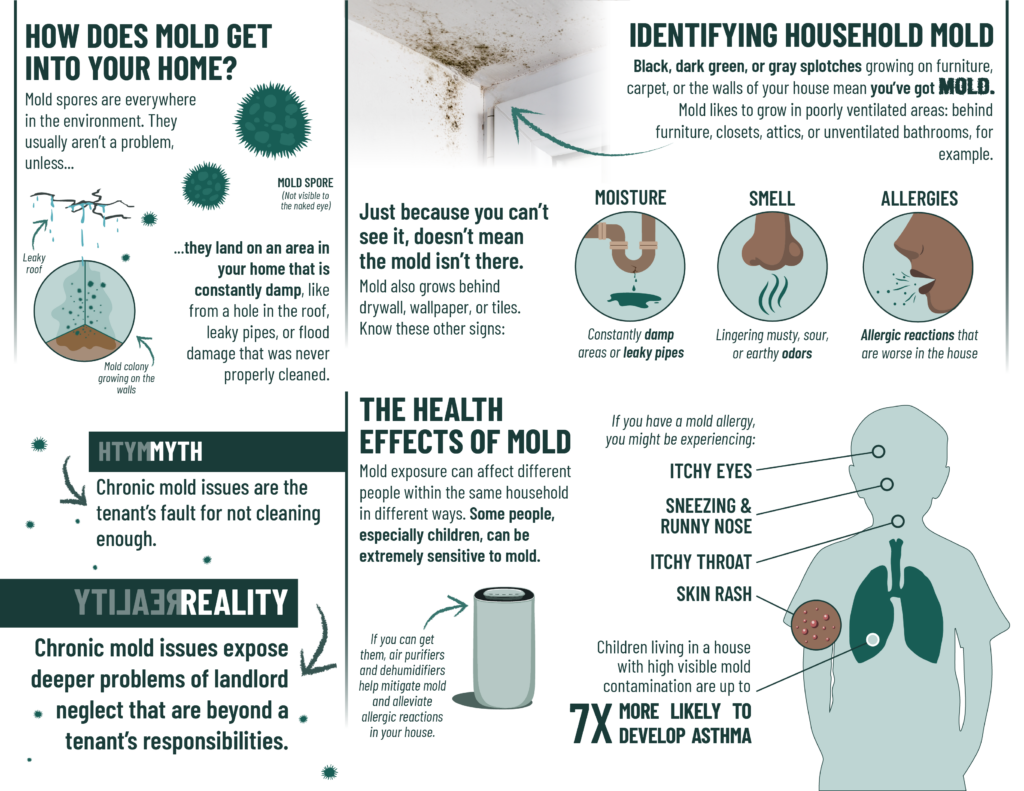
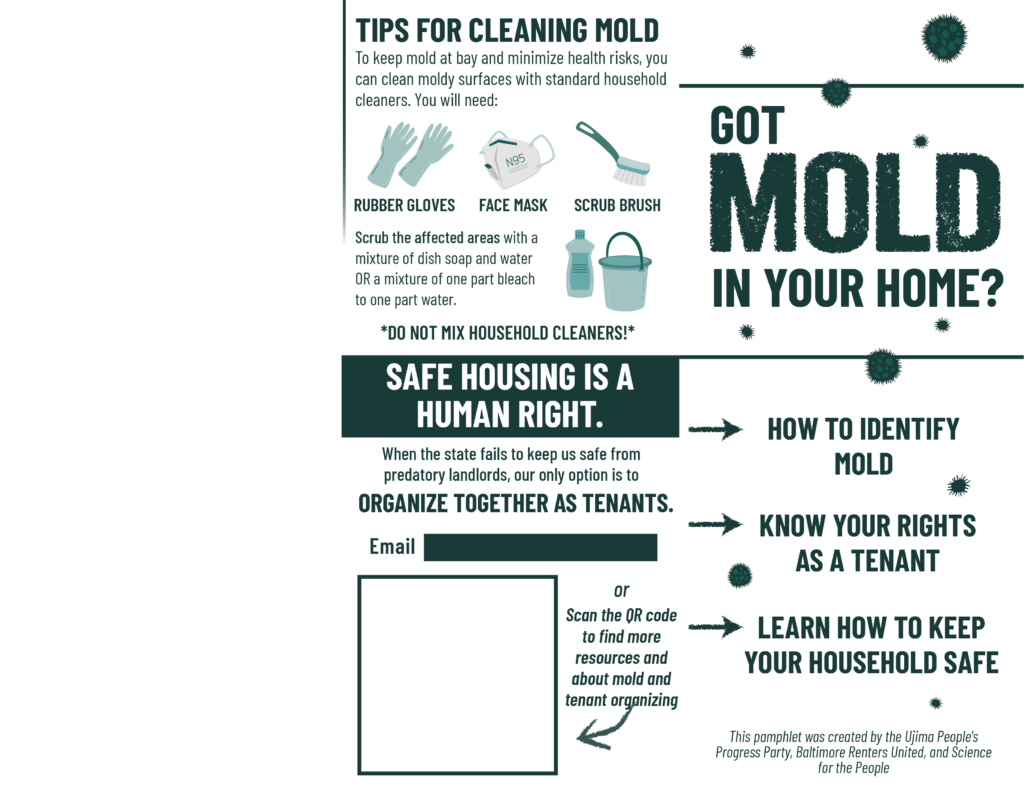
This pamphlet was developed to support tenant canvassing and education on mold contamination in rental housing. In addition to providing important facts about identifying mold, cleaning mold, and the threats mold contamination poses to health, this pamphlet stresses the role of landlord neglect in causing and exacerbating mold issues in rental housing. We also highlight the role of tenant unions in forcing landlords to act on these issues.
This pamphlet was developed in partnership with Baltimore Renters United and the Ujima People’s Progress Party. The template available for download here includes a blank flap (originally filled with information on Baltimore and Maryland legislation on mold) and a space for an email and QR code for more information.
If you, your union, or your organization is interested in using the pamphlet below for canvassing or educational purposes, please feel free to download and edit it as needed. If you would like help in editing this pamphlet or in distributing materials, please reach out to us at nhv@scienceforthepeople.org!