This statement was originally posted on the main Science for the People website by the SftP Steering Committee and is reproduced here.
In its monstrous assault upon the sovereignty of the Venezuelan people on January 3, the United States has kidnapped president Nicholás Maduro Moros and first lady Cilia Flores, killing at least 100 people. Leading up to this operation, the US extrajudicially murdered at least 123 people in strikes in and around the Caribbean and intensified its military occupation of Puerto Rico [1]. These strikes, in addition to serving their primary function of resource theft at gunpoint, followed the imperialist tradition of epistemicide: the targeted destruction of knowledge and the means of producing it. Among destroyed infrastructure were a medicine and food warehouse at La Guaira port, and vital research facilities of the Mathematics Center of the Venezuelan Institute of Scientific Research (IVIC), Miranda State [2].
The specificity and intentionality of the assault recalls the 1998 bombing of the Sudanese Al-Shifa Pharmaceutical Facility, a statement by US imperialism, then as now, of its demand for total monopoly on knowledge production and its intention to leverage human necessities as weapons of war. Such attacks are tactics of underdevelopment, designed to undermine the sovereign capacity and self-determination of formerly colonized nations. Incessant warfare and the business of death and genocide, such as what we have witnessed for the last 828 days in Gaza, where universities and generations of stored knowledge were systematically eradicated, are the final refuge of capital in its endless drive to shore up profit rates.
What is under assault is not merely a nation-state, but also a concrete experiment in socialist construction. Emerging from the Bolivarian Revolution, Venezuela’s communal project has sought to combine revolutionary state power with grassroots popular institutions—communal councils and communes that organize production, land, health, education, and knowledge itself as social property [3]. It is precisely this effort to institutionalize popular power, rooted in working-class, Indigenous, and Afro-Venezuelan traditions of collective self-governance, representing a living experiment in self-determined development, that makes Venezuela a target of sustained U.S. aggression.
As funding for health and environmental research across the United States is stripped away at breakneck pace to funnel all ingenuity and labor into military buildup, mass surveillance, and internment, it is becoming apparent that scientific endeavor for the betterment of humankind and preservation of life is unattainable under the current system. Faced with the decline of the unipolar world economic order that dominated the post–Cold War era of “globalization” and “free trade,” the capitalists of the US-led Global North see the prospect of more aggressive foreign policy and intensifying domestic repression as a golden opportunity to profit from death and destruction. This futile attempt to stave off capital’s primary contradiction, its tendency toward economic and ecological crisis, is nevertheless pursued by a capitalist class whose interests are totally antithetical to the greater needs of human society, culminating in acts of base piracy and a hatred for the pursuit of truth.
We at Science for the People wholly reject and condemn the endless spiral towards warfare for profit of the United States, exemplified by its latest cruelties against Venezuela and its revolutionary project. We reject the monopolization and direction of scientific labor towards the death-dealing technologies deployed by the military and police forces, just as we rejected it across decades of US warfare, during the war against Vietnam, from the nuclear arms race and Cold War interventions to Iraq, Afghanistan, and today in Gaza and Venezuela. We stand in full solidarity with the people of Venezuela in their project of creating an alternative to capitalist society, of daring to invent the future. We demand a full withdrawal of all US military presence on the nation’s shores so that its people may utilize their natural resources for their own development and their own knowledge-creation, rather than for the enrichment of US empire and ghoulish oil industry billionaires.
“Confirmed: The United States completely destroyed a vital scientific and academic center in Venezuela, located in Miranda state,” Camila [@camilapress], January 7, 2026, https://x.com/camilapress/status/2008934970916782243.
The New Haven chapter of Science for the People stands in solidarity with Yalies4Palestine and strongly condemns the Yale University administration for its ongoing repression of Y4P, including the latest action of stripping the group of its student organization status and its ongoing shameful support of the genocide against the Palestinian people by the zionist regime.
While Yale University continues to punish student activists and stifle the protest and free speech rights of those opposing the worst possible crime, it turns a blind eye to zionist counter-protestors who harass and dox anti-genocide students (while throwing baseless allegations of antisemitism with full impunity), welcomes war criminals – israeli minister Itamar Ben Gvir, an abhorrent anti-Arab racist, a serial abuser of human rights, an architect of genocide (a terrorist even by israel’s standards!) – and continues to profit from investments in genocide.
As the casualties in Gaza continue to rise by hundred eery day, as Palestinians in the West Bank and occupied territories continue to be terrorized, abducted, and murdered by the zionist occupation, as the israeli blockade of Gaza has now prevented any food from entering for two months, with the resulting intentional famine already claiming more lives, we reaffirm in the strongest of terms:
We stand with all people of conscience who protest, disrupt, and fight against the zionist agenda.
We stand with the Student Intifada and Yalies4Palestine.
We stand with the people of Palestine and all peoples subject to occupation, oppression, and genocide.
This statement was originally posted on the main Science for the People website by the SftP Steering Committee and is reproduced here.
Nearly a decade after the slogan “Believe Science” became popularized, the established scientific profession is once again called upon by the opposition to the second Trump administration to take a political stance. Whereas the first such “defense of science” in 2017 confronted conspiratorial dismissals of the scientific consensus on climate change and science education, the battlefront in 2025 has retreated so far that the rightwing offensive has directly disrupted federal science funding on which much research production in the United States depends. Between 2017 and today, we have faced planetary crises, including the ongoingCOVID-19 pandemic, wildfires and floods on unprecedented scales, and still-accelerating CO2 emissions, as well as the rising tide of neofascism. Not only has a liberal defense of science been unable to weather the metaphorical and literal storms, it has also contented itself with making technologies that enable more destructive wars and genocide. How did we get here? Why did the “defense” fail? What is to be done differently?
We recognize that science is inherently political. Science is defined as a set of human practices relating to knowledge that arises from, is shaped by, and helps reproduce the social systems in which it is embedded. Thus, science is not an objective good or neutral tool; it interpenetrates with all other social phenomena such as class, race, sex, gender, geography, and culture. Science throughout history is practiced unequally, benefits few, excludes many, and is inextricable from its human consequences. To defend “science,” we must first ask: Science for whom? By what means? Toward what ends?
Science is subordinate to class interests. Under capitalism, imperialism, white supremacism, cis-hetero-patriachy and other oppressive systems, the owners of science—the corporations, the wealthy elites, the military-industrial complex—dictate the agenda of scientific research, public education of science, and the market supply, demand, and price of scientific labor. This ruling class taunts scientists with the myths of individualism and meritocracy (in its celebration of personalities like Musk and Bezos) while extracting our work and dictating our livelihood. This ruling class exerts full control of the political system under so-called liberal democracy, and both parties and their politicians operate within the constraints of the ruling class consensus. As witnessed during the disastrous pandemic response then and the market-driven neglect now when vulnerable populations continue to die, appealing to the elected officials to defend science is a dead-end. In order to assert political agency as science workers, we must organize our own workplaces and communities in solidarity with the broader working class and social movements in a common struggle.
Science has been made possible by colonialism and imperialism. Scientific advancement in the US in particular, and the Global North in general, is built upon historical and present-day colonial plundering of land, resources, and labor, as well as draining of scientific expertise through migration from the Global South. “Progress” and “enlightenment” for the privileged few are exploitation, destruction, and displacement for the many. American science is complicit in national chauvinism, conquest, and oppression of knowledge production in other parts of the world. Science workers in the Global North must recognize our privileged position and be conscious of the social consequences of our sciences.
Science must encompass all fields of human inquiry. Science involves not only the study of the natural world, but also of society. The demarcation of STEM from other academic disciplines is an artifact of the structure of US science funding, which has resulted in uneven practice of human knowledge. The humanities and social sciences have long been threatened by rightwing offensives including funding cuts, adjunct hiring, departmental mergers, suspension of admissions, and censoring of scholarship—all of which warrant much greater attention and solidarity by those attempting to mount a defense of science. It is crucially important to reject STEM exceptionalism and to join and learn from the wider struggles against repression in higher education, especially facing increased state-sponsored terror against immigrant student workers and academics.
Defending science is not enough; science must defend the people. The attacks on science and academia did not occur on a whim. It is a continuation of the ongoing expropriation of the infrastructure of knowledge production and the accelerated privatization (degradation) of public institutions. It is a logical next step in a class war to defund education, healthcare, and any enterprise that retains the promise of benefiting working people and communities. This informs what types of science are undergoing austerity and what other types might experience booms: privatized high tech, military, agribusiness, and philanthrocapitalist pharmaceutical manufacturing and sales. Thus, instead of defending an abstract notion of science, we must scrutinize: science for whom, toward what ends? We defend a science that is for ecological restoration, vaccine development, transgender healthcare—a science that supports the wellbeing of people and the environment. We reject a science that is funded by the military, the fossil fuel industry, and Israel. We condemn a science that serves no benefit to the people other than accumulating profit.
We believe that a science for the people and a humane future can only be achieved through fundamental transformations of society. Join or start your local SftP chapter, build a militant science worker movement in principled solidarity with Palestine, Congo, Cuba, Puerto Rico, and everywhere imperialist science is detrimental to the oppressed. Organize to redirect society so that society can redirect science.
The New Haven chapter of Science for the People invites all scientists, tech and academic workers in Connecticut and beyond to join us in the struggle against capitalism, the reactionary politics that undergird it, and the false promise of liberalism as a political alternative.
The only real alternative is to establish vibrant anti-capitalist mass organizations.
Trump returning to the White House signals a serious decline in the ability of liberalism to justify itself as a progressive political alternative to reactionary conservatism. For decades, liberalism and conservatism have operated as two faces of the same coin: hand-in-hand they propel capitalism forward by inertia, if nothing else.
As such, we see that liberalism fails again and again to secure even the most basic protections for abortion access, immigrants, and the LGBTQ+ community, a weakness that will now be exploited by Trump and his neo-fascist cronies.
What does this mean for scientists, for whom liberalism is often the political partner to the perceived progress of science?
First we should ask: what has liberalism offered to science as a human endeavor?
Our view is that liberalism has duped scientists again and again. While budgets for vital basic research recede and scientific activity is further cordoned off into private firms with no accountability to the public, liberals have turned a blind eye to the impending climate catastrophe and placed science in deeper subservience to the military industrial complex. This makes scientists the stooges of capitalism, imperialism, and ecological exploitation against their will, the consequences of which have become devastatingly apparent as the genocide in Gaza proceeds uninhibited with the full support of the Democratic Party.
Moreover, as science continues to become a more diverse profession, the oppression of people with marginalized identities will not only hurt our friends and colleagues, but undermine scientific work by making the discipline even more precarious for many people.
How can scientists resist this depravity and build a better alternative?
We compel scientists to realize their role as agents in class struggle, rather than elite, individual, and politically disaffected actors.
Science is a social endeavor, driven by the combined efforts of vast numbers of people working diligently across the globe. The products of science form the basis of the modern world: technological advancements most often start in publicly-funded laboratories. But most scientists have no control over how the products of their research are used. Our disciplines are driven by university administrators, venture capitalists, and the boards of tech companies. Scientists are thereby made more and more into proletarians: cogs trained in the academic machine to which we must submit in return for a paltry wage, insufficient benefits, and no social safety net.
We do not have to accept this fate.
We should accept that the conditions of science are deteriorating under the stewardship of liberalism, and with them the conditions of life on Earth. We believe this ought to compel scientists to recognize that their fate is intertwined with that of all proletarianized working people, in the so-called US and around the world. If this is true, it’s about time we start acting like it!
Scientists need to organize within the working class, and we offer Science for the People as a home for all scientific workers to begin to organize in opposition to capitalism, the false hope of liberalism, and the depravity of conservatism and neo-fascism.
This means that scientific workers need to rebuild the infrastructure of working class institutions in their workplaces, their apartment buildings, and in their communities. Whether we are fighting for better wages, reduced rents, or against imperialism, we should be cohering these struggles into a unified political movement against capitalism and for socialism.
Join us – You have nothing to lose but your chains!
The question of how to practice “science for the people” should be a focus for all radical scientists, and indeed it has been a driving force behind the development of the New Haven chapter (SftP-NHV) since its inception one year ago. As capitalism continues to degrade the basis of a dignified existence in full view of the world’s working people, the need to recommit to a radical anti-capitalist approach is as obvious as ever. Determining where to channel these efforts remains a challenge. In many ways, our current moment is defined by the dissolution of working class institutions, such as militant unions and workers’ parties, that existed through much of the twentieth century. This decomposition—and the accompanying decline in the tradition of radical science —leaves scientists with few spaces to participate in political struggle.1 The recent surge of unionization in higher education has been an encouraging development. However, scientists’ participation in union movements does not necessarily require a class analysis of science itself. At the same time, class struggle encompasses much more than workplace unionization. Therefore, we must begin to relearn the practices that can mobilize science effectively in support of the working class and its recomposition (i.e., its rehabilitation into a unified class organized against capitalism). In other words, how can we practice science as class struggle?
In Connecticut, the recent development of the statewide tenant union movement provided the most obvious inlet into an active terrain of class struggle. By building on existing relationships with tenant unionists, specifically with the Cargill Tenants Union (CTU) in Putnam, CT, we were able to mobilize scientific resources in support of CTU’s effort to secure abatement of high levels of lead contamination in their homes. While developing this project, we were introduced to the idea of “solidarity science”2 by comrades in the Western Massachusetts chapter of SftP, which posits that scientists should not only work for but with the people, whose experiences and understandings are necessary for a science that addresses social needs and advances justice. Inspired by this, we aim to practice science in solidarity with class struggle(s), applying the skills and tools of science in struggle with the working class, resisting service-based models that often plague the attempts of scientists to intervene in social issues. In this vein, we have sought to develop an organizing project that deploys scientists as agents in class struggle.
In this article, we provide an overview of the development of this specific struggle, our development as an organization, our intervention in this fight, and the political and practical lessons we have learned. In our view, this provides a first step for engaging scientists in the process of class recomposition in parallel with the reemergence of socialist, working class institutions and organizations.
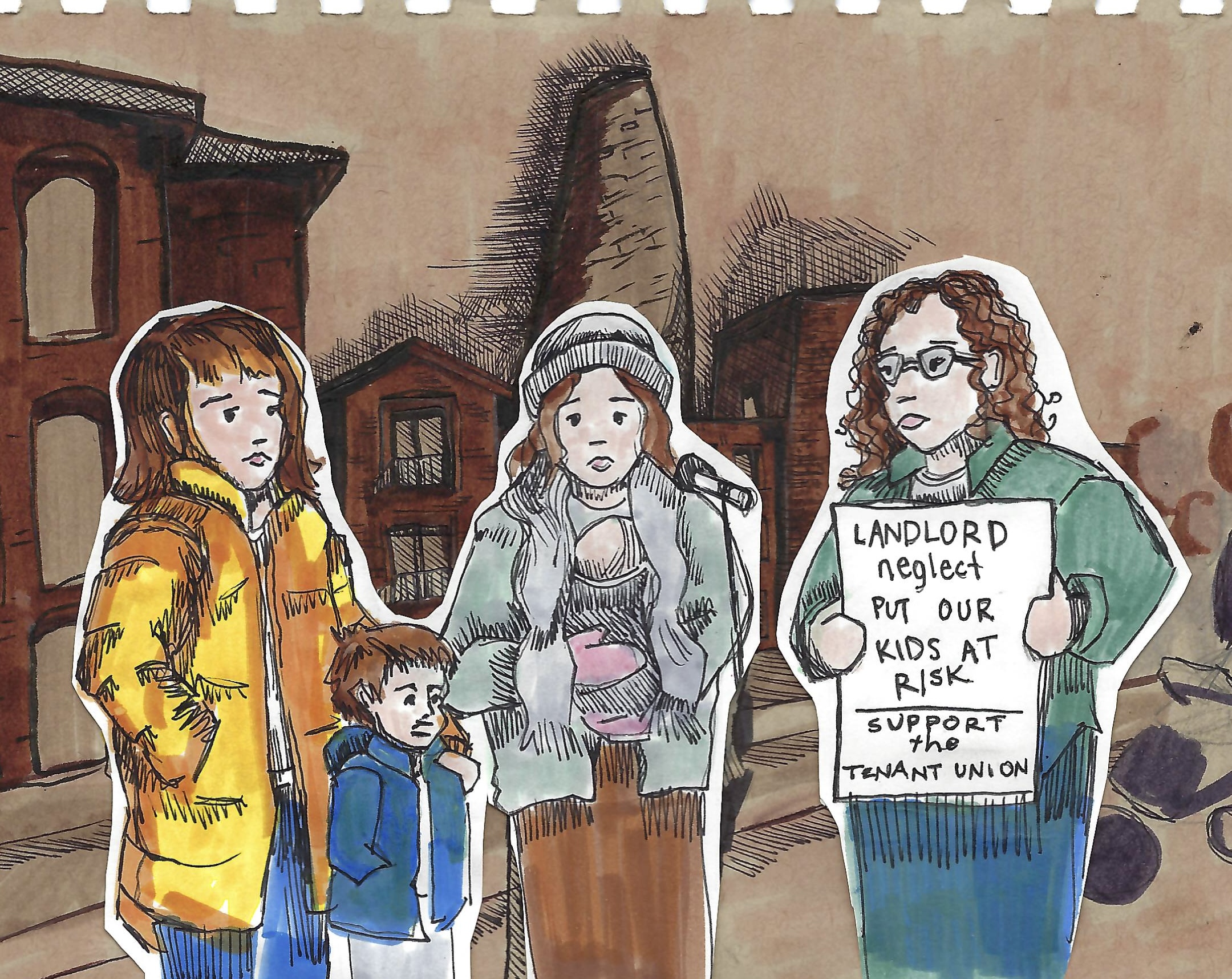
Cargill Tenants Union held its first press conference in February 2023
Development of the Cargill Tenants Union: Organizing around Lead and Mold Contamination on the Path to a Wildcat Rent Strike
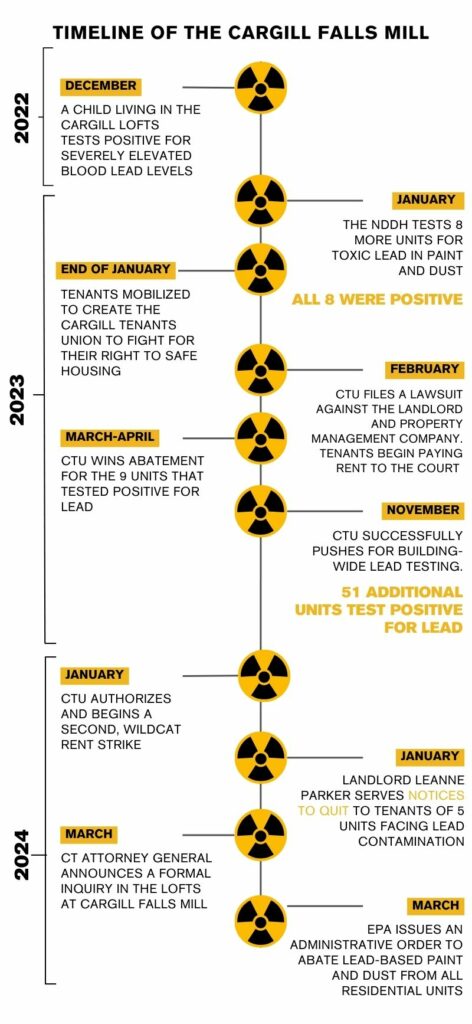
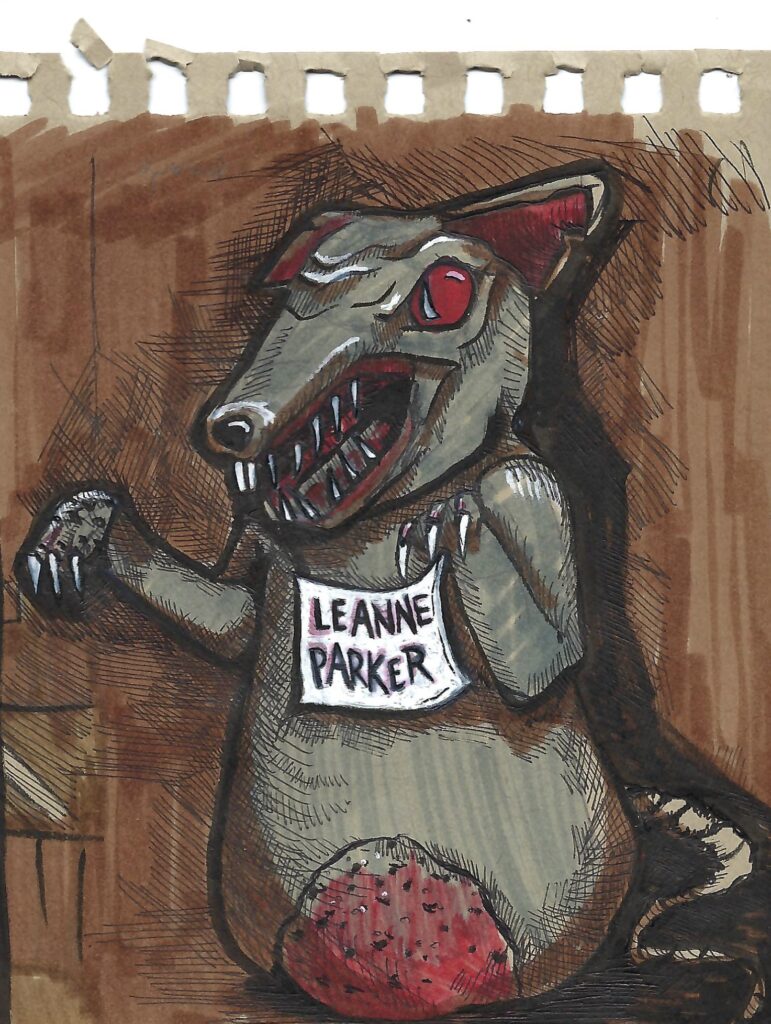
The Lofts at Cargill Falls Mill in Putnam, CT opened its doors to tenants in 2020 with the promise of fulfilling local affordable housing mandates.3 Putnam is a small post-industrial exurb in the northeast corner of the state, detached from urban centers. Millions in federal and state subsidies were granted to the developer and landlord to renovate the nineteenth century textile mill, turning the Brownfield site into mixed-income housing. The property owner, Leanne Parker of Historic Cargill Falls LLC, is also behind a shadow “green energy” LLC operating the mill’s hydropower system. Both LLCs received federal and state grants to subsidize remediation and construction. Yet in December 2022, only a couple years after the complex opened, tenants were notified by the Northeast District Department of Health (NDDH) that a toddler had been poisoned by shocking levels of lead found in the family’s unit. Lead dust levels on the floor of the apartment were almost 5,000 times the level considered hazardous by the Environmental Protection Agency (EPA). While lead paint, and resulting toxic dust, is expected to be found in buildings older than 1978—the year that US regulations around the use of lead paint were introduced—Cargill Falls Mill was a recently renovated property. NDDH subsequently tested the eight units in the building with young children and all units had hazardous levels of defective lead paint, lead dust, or in most cases both. Some of the children in these apartments already had elevated Blood Lead Levels (BLL).
Due to the acute risks to young children, concerned parents organized the first few tenant meetings. A supermajority of tenants voted to form the Cargill Tenants Union (CTU) in January 2023. As they organized members, tenants uncovered more chronic issues including pests, cracking drywall, crumbling bricks and masonry, water-damaged load-bearing wood, stagnant moisture and leaking, and toxic mold conditions. The early development of CTU as a union was greatly supported by the Connecticut Democratic Socialists of America’s (CT DSA) Housing Justice Project (HJP), Connecticut Fair Housing, and tenant union locals affiliated with the Autonomous Tenants Union Network (ATUN).
Due to the extreme dangers present together with the landlord’s refusal to communicate, within a month of getting organized, CTU members went on their first rent strike.4 From February to August 2023, tenants followed Connecticut’s legal process of paying rent into escrow accounts under the local housing court. CTU served a letter to both property management and the landlord with the following demands: comprehensive lead and mold inspections throughout the complex, swift abatement of health hazards, proper maintenance staffing, and structural repairs. The only units that had received lead inspections were those housing young children at the time of the initial lead discovery, and the landlord was refusing to inspect additional units. The Putnam housing court ended up dismissing cases filed by tenants without lead inspections, circularly citing the lack of evidence of lead contamination in these apartments. Understaffing and disinvestment by municipalities in Windham County resulted in the NDDH failing to enforce lead regulations and lacking the capacity to monitor the situation.
Nevertheless, CTU’s first rent strike won a rent freeze into 2024, comprehensive lead inspections paid for by the CT Department of Housing, air quality inspections, mold and lead abatement in some units, and renewal of leases for vulnerable tenants. The few families that relocated for abatement were fairly compensated, thanks to union demands.
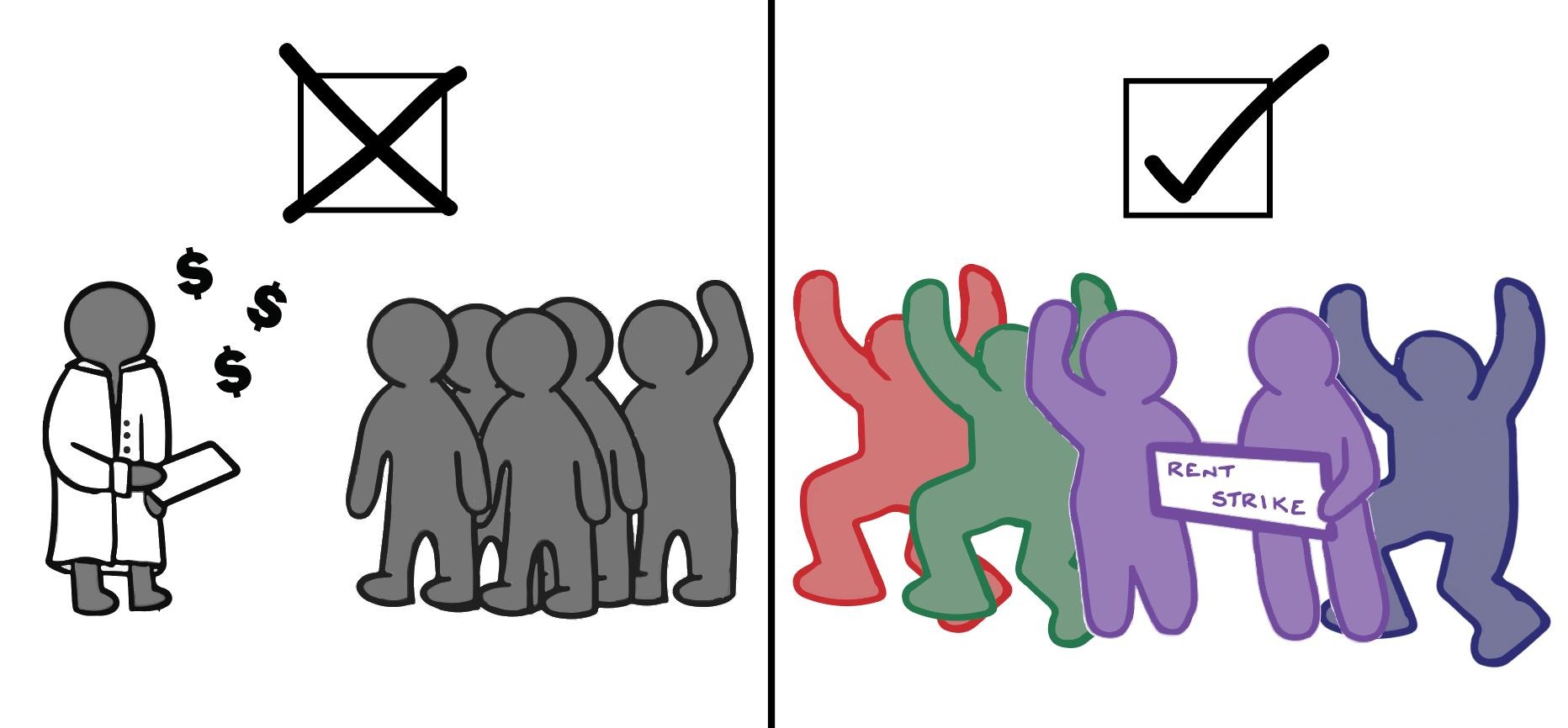
Tenants received the results of union-won lead inspections in November 2023: the majority of tested apartments and common areas had toxic lead levels, and some children were still living in unabated units. Media coverage had dwindled, tenant turnover led to multiple rounds of union reorganization, and the initial strategy of filing housing court cases to force repairs had lost traction. At this point, the CTU organizing committee recognized a need and opportunity to escalate their fight against the landlord. In order to rebuild the union, organizers knocked doors in the complex over the winter holidays, sharing health and hazard information that had been withheld from tenants. After several member meetings and individual organizing conversations, CTU decided to pursue a rent strike for the second time. Members were asked to sign a pledge to withhold rent outside of the established housing court process—collecting the money themselves. The majority of tenants feared retaliatory evictions too greatly to attempt another rent strike, but supported the action as signatories on the new demand letter. A group of a dozen tenants, those willing to risk housing court, authorized a wildcat rent strike beginning in January 2024. The landlord immediately retaliated by serving Notices to Quit (an “eviction notice”) to members withholding rent, but not before tenants brought national attention to their struggle.
Integrating SftP-NHV into Regional Class Struggle
The New Haven chapter of SftP came together in late spring 2023 around the desire to build a community of scientists with radical politics at Yale University and in the greater New Haven area. We began very intentionally from a position of not confining ourselves to the Yale community, which we felt was not only inconsistent with our politics, but risked compromising the anti-capitalist character of the organization. A desire emerged within the chapter to develop an explicit organizing project. As many of the participants in the chapter at this time were scientists or academic workers, the notion of “citizen science,” or “community science” was a natural extension of this desire.
We were already aware at this time of various critiques of the typical “non-profit” disposition of many community science projects, that neither applied a class analysis to their work nor developed the leverage necessary to enact change around an issue outside of petitioning legislators, city governments, etc. The ineffectiveness of the already-existing lead regulations in the state underscored our decision to avoid time-consuming and minimally impactful projects focused on policy change. We also benefited from the broader SftP community which was able to share various practical insights into the development of such a project. It was in many ways a fortunate coincidence that the question of how best to approach a community science project from a class struggle perspective arose in the midst of heightened tenant unionism across the state of Connecticut.
SftP-NHV logo
A crucial element in the development of our work was an ongoing relationship between our members and tenant unionists in CTU. It was the establishment of this basis of trust and comradeship that enabled a collaboration to blossom. But, more importantly, this relationship was a prerequisite for identifying the tenant union struggle as a site to implement solidarity science as such. That is, we were already aware at this time that CTU was organizing around the issue of lead and mold contamination in their building, and we saw in this fight the opportunity for applying scientific skills and resources to advance their struggle. We therefore formed the Lead and Mold Contamination Working Group within SftP-NHV as the organizational locus of the chapter for participating in this struggle.
It is worth noting that our first instinct in this regard was to attempt to divert university resources (instrumentation, expertise, etc.) toward CTU’s organizing. For example, we attempted to locate scientific instrumentation that would allow us to measure lead from samples taken directly from the Cargill Falls Mill. There may yet be some merit to this approach; however, not only were we met with institutional opposition and political indifference, we understood that any measurement we produced, no matter how rigorous, was unlikely to be treated with the same authority as a state-certified inspection result. We therefore considered how we could implement our individual skills to advance the tenant union’s ongoing organizing work.
Data Analysis as Agitprop and Infrastructure for Autonomous Tenant Organization
Initial analysis of the data took a technical, practical, and exploratory form—converting the data to a usable format, understanding the values we were looking at and where they came from. Next, we determined some basic questions that would prove useful in better understanding the extent and nature of the lead contamination. As we progressed, more salient questions arose: How were we to think about data in a way that ensured participation in struggle with the tenants rather than as a service-oriented project? Our experience and training as scientists primes us to think in particular modes that are not always amenable to tenant struggle. A political lens on data analysis led to the emergence of the following tangible uses: enriching the existing organizing infrastructure maintained by the tenants, practical health and safety applications, and agitprop.
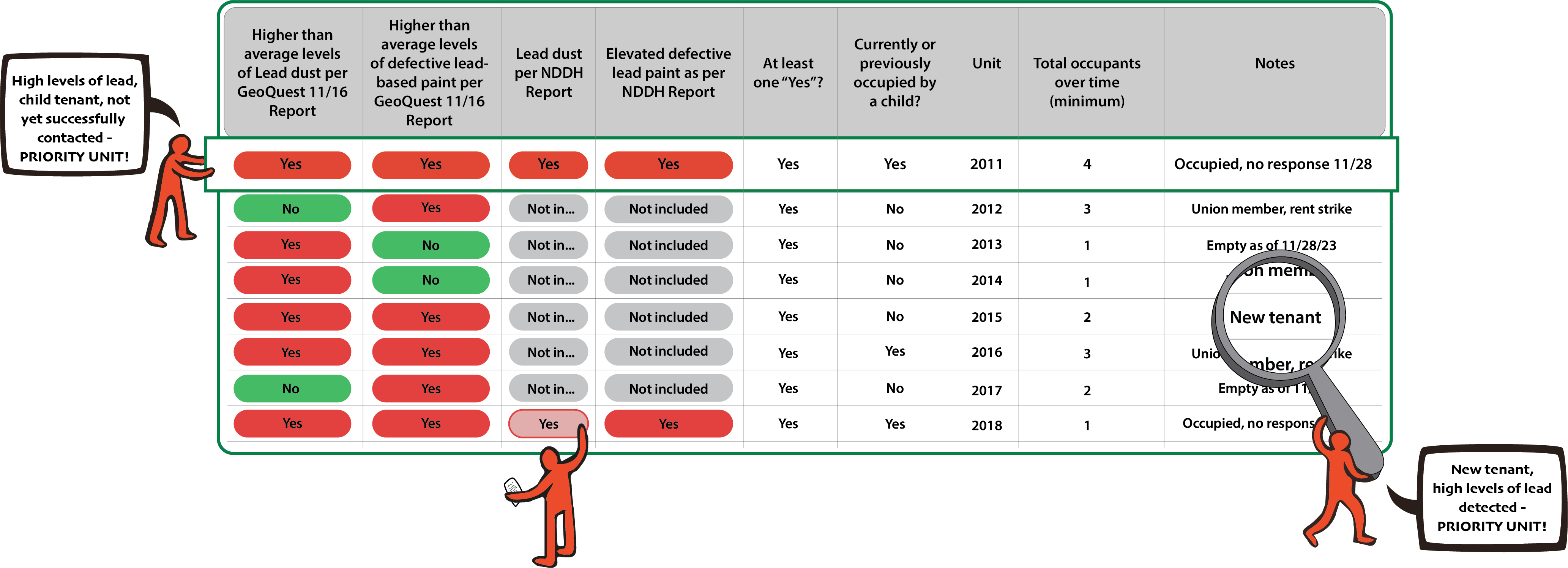
Access to the tenant organizing database was a catalyst for making the data politically useful. Each row features a unit in the complex with columns for demographic information on tenants, their status as union members and rent strike participants, and further organizing notes. We were able to integrate the testing and abatement data for each unit and the benefits of this method became immediately apparent. High priority apartments for one-on-one organizing conversations were identified: for example, a tenant who had not yet opened the door for union conversations was found to have some of the highest lead dust levels in the building. Immediate attention was brought to specific health concerns, including high levels of defective lead paint identified in a child’s bedroom, the risks of which had not been properly communicated to the family in that unit. While petitioning institutions and the courts was not a goal for our project, the work we put into sorting and processing documents proved valuable to investigators from the EPA and pro-bono lawyers representing tenants.
Example of the lead contamination data being integrated into the Cargill Tenants Union’s organizing database.
The incorporation of the testing information into the database also allowed us to generate graphics that made the need for intervention transparent and urgent, leveraging the data visualization skills of working group members. We were able to clearly state, expose, and disseminate the number of affected units and the minimum number of people and children who had been living in conditions with toxic lead, something that no government agency, landlord, or even the testing company was able to do.5
Throughout the politicized data analysis process, we were able to emphasize the contrasting manner of data use by the property management, landlord, local health department, and testing and abatement companies: they were obscured, inaccessible, and without utility to tenant needs. Even after the tenants won comprehensive lead testing, they were simply given a 1,312 page document with minimal interpretation and no guidance on how to proceed in order to protect themselves. Despite the majority of units in the building testing positive for dangerous levels of lead dust or paint, months later no abatement had occurred and the path to proper abatement remained unclear. Moving forward with a radical analysis and use of data allowed our work to advance the principles of radical science. We firmly rejected the idea that data analysis is an apolitical or unbiased venture, seeking to expose the bias of existing data collection and interpretation practices with the goal of enabling CTU’s militancy. Politicizing the lead inspection data transformed an inert and opaque dataset into a powerful organizing tool.
This was a rapidly changing situation with respect to both the needs of the tenants and the information available to us. What had started as a project to potentially complete DIY lead testing turned into a data-heavy project when the tenants won comprehensive testing. On more than one occasion, tenants would be surprised by unannounced, insufficient, and hazardous abatement work being completed by a company not even insured to abate historic properties. Tenants reported to us that the owner of the abatement company would show up without warning in an otherwise unmarked van with an “Infowars” sticker to set up shoddy abatement worksites, which on at least one occasion resulted in injury to an elderly tenant. Thus we would often shift gears from the data, to information gathering, to academic literature searches on lead hazards and best practices for abatement.
It is insufficient to simply transplant scientists from the academy into class struggles. Many scientists must be properly politicized, which we believe requires their development as agents in class struggle first, and as scientists second.
Our ability to carry out analysis of the situation was directly proportional to the organizing pressure applied by the tenants, in terms of getting the testing done, the documentation maintained by the tenants, the intra-union relationships between tenants, and the extent of public outreach. Underlying all of this, it was of utmost importance that our analysis be shaped around the organizing strengths and needs of the tenant project, not the other way around.
What can tenant organizers look for in these types of collaborations? This was a tenant project ripe for a collaboration with a team of radical scientists. Our advice to tenants seeking scientists to join their struggle is to find those who hold radical perspectives and have organizing experience—while this does not describe the majority of scientists, we are out there and growing as a force.
Practical and Theoretical Outcomes: Class Agency as the Basis for Solidarity Science
We began this article by asking how we could practice science as class struggle. We can now provide a cursory answer to this question. We should first account for a clear tension in the basic notion of “class struggle science,” which is that the ostensible class position of scientists (academic or otherwise) is often tangential to the working class. Scientists are trained in deeply “de-politicized” environments. Even within the academic labor context, they often occupy an ambivalent, if not reactionary, fraction within union struggles.6 Thus, it is insufficient to simply transplant scientists from the academy into class struggles. Many scientists must be properly politicized, which we believe requires their development as agents in class struggle first, and as scientists second.
The cultivation of class agency requires both political education and direct experience in the working class. This serves two important functions: first, it protects solidarity science projects from infiltration by liberal elements that will turn our efforts away from base-building and class struggle toward toothless petitioning and legislative campaigns. Second, it creates the basis upon which the necessary relationships between scientists and working class institutions engaged in struggle can be built. If we identify as scientists first, and as agents in class struggle second, we risk falling into the same elitist, exclusive trappings upon which the entire university edifice is constructed. Our goal should always be to supplant this edifice with the horizon of solidarity science.
This perspective stems from our own organizing backgrounds and experiences. We feel strongly that our work, and the political analysis that has developed from it, would not have been the same had we not had the benefit of decades of prior organizing experience collectively: within unions (both leadership and rank-and-file), prison abolition movements, student activism, tenant organizing (from canvassing to the robust involvement described above), environmental justice, reproductive justice, and more. Intentionally positioning ourselves as agents of class struggle informed the development of our project not as charity or service, but as an important and novel appendage of the ongoing tenant organizing efforts of CTU.
Solidarity Science: What Is to Be Done?
While each organizing context is unique, here we hope to emphasize characteristics that can inform tenant organizers and radical scientists interested in developing a similar collaboration. Our involvement in CTU’s organizing became more valuable as it became more apparent that the local public health infrastructure was inadequate. The NDDH lacks sufficient resources due to depleted municipal investments and thus is unable to reliably fulfill the basic legal mandates for inspections and enforcement. The local hospital is in disrepair, there are no shelters for the unhoused, and there is no public transit. This stands in stark contrast to more developed municipalities with more robust public health infrastructure; thus, such factors should be taken seriously in evaluating the terrains of struggle and goals of similar organizing projects in different locales. Nevertheless, canvassing of similar renovated mills in larger towns in CT (which chapter members participated in) revealed that the lead and mold contamination at Cargill Falls is not an isolated issue. In fact, we think lead contamination may be endemic to these properties, many of which have been renovated by the same developer(s).
AFSCME Council 4 brought Scabby the Rat to the Rally to Defend CTU.
In addition to the politicized data analysis, there was a knock-on benefit provided by the “legitimacy” that scientists could offer to CTU’s cause. Our involvement, and the credibility that came with it, was a boon to CTU’s organizing because we could offer relevant expertise. We do not wish to convey that it was our expertise alone that made us useful to this struggle—we had no formal, institutionalized experience or training in dealing with lead contamination, lead poisoning, etc. In alignment with the principles of solidarity science, the tenants were in many ways experts in their own situation. However, institutional bias in favor of scientific and technical expertise can be directed politically to benefit political struggle.7
Because Putnam has no active political base or advocacy groups, we were also able to support CTU’s organizing by doing data-heavy administrative work. This was vital not only to the lead contamination case the tenants were making, but also in providing support to otherwise geographically and politically isolated organizers. In this way, we expanded the capacity of CTU directly, while simultaneously developing the political nature of the struggle.
We would be remiss not to acknowledge the historical legacy within which our work has developed. It is no coincidence that the original manifestation of SftP in the 1970’s developed the Technical Assistance Program (TAP) in Boston, MA, which mobilized scientific expertise to prevent the construction of a highway over a vulnerable neighborhood, and collaborated with the Boston chapter of the Black Panther Party to install an electrical generator to provide power to medical clinics. As long-time SftP member Herb Fox wrote in 1970, “TAP is one of the ways to put the slogan ‘Science for the People’ into practice.”8 Contemporaneously, the Young Lords staged an occupation of the Lincoln Hospital in New York City’s South Bronx to draw attention to health disparities in the largely black and Puerto Rican community.9 The Lords also ran “The Lead Offensive,”10 an effort to identify instances of lead poisoning in their communities. The Lords were trained by medical doctors at the Metropolitan Hospital in East Harlem to perform lead screening tests, finding one third of the children they tested to have lead poisoning. By bringing national attention to the issue, they were able to provoke the implementation of more rigorous lead testing in their communities. Along with additional efforts like “The TB Initiative,” which screened for tuberculosis infections via takeover of a city X-Ray truck, the work of the Lords provides a profoundly inspiring example of solidarity science in action more than 50 years ago that we should reflect on in our movements today.
Radical scientists should envision themselves as agents engaged in class struggle with tenants and workers, rather than experts-for-hire.
Ultimately, our collaboration with CTU solidified their project as a socialist one. Because we began our work with the recognition of CTU as a sovereign political entity, our collaboration only served to deepen our collective political analysis and tactical approach. When compared to more typical collaborations that might emerge—say, with non-profits or local electeds—our collaboration heightened the most relevant aspects of CTU’s struggle and informed and supported their most militant endeavors, rather than subordinating them to the interests of outside organizations. In support of the wildcat rent strike, the “Rally to Defend CTU” convened organized tenants, labor unionists from AFSCME (American Federations of State, County, and Municipal Employees), socialists, lawyers, and scientists. The development of this coalition should serve as an example not only for building the political and social infrastructure required to win organized struggles against bosses and landlords, but also as a guiding principle for how radical scientists can engage in such struggles: as active participants, not philanthropists.
As a result of CTU’s organizing, the Connecticut Attorney General formally opened an inquiry into the landlord’s possible misuse of state and federal funds, originally granted to her for remediation of hazardous materials, hydropower conversion, and provision of affordable housing.11 Most recently, the EPA has intervened in the lead abatement process at the Lofts at Cargill Falls Mill, issuing a monumental Administrative Order against Leanne Parker and investigating violations of federal regulations.12 Some families are still on rent strike, and several tenants beat back their eviction cases and successfully negotiated to stay in their homes. These developments are a testament to the organizing efforts of CTU, and we encourage radical scientists everywhere to imagine a place within these struggles. We all belong to this fight, and indeed, we have a world to win.
SftP-NHV at the Rally to Defend CTU in February 2024.
—
Nick P is a scientist, socialist, and co-founder of the New Haven chapter of Science for the People.
Emily S is a scientist, organizer, and co-founder of the New Haven chapter of Science for the People.
Katy S an artist, mother, and founding member of the Cargill Tenants Union in Putnam, CT. She is a member of Connecticut Democratic Socialists of America and DSA’s Communist Caucus.
Tamara R is a science communicator with a passion for environmental justice. She lives with two beautiful tuxedo cats, is an avid forager, and is a lover of sci-fi.
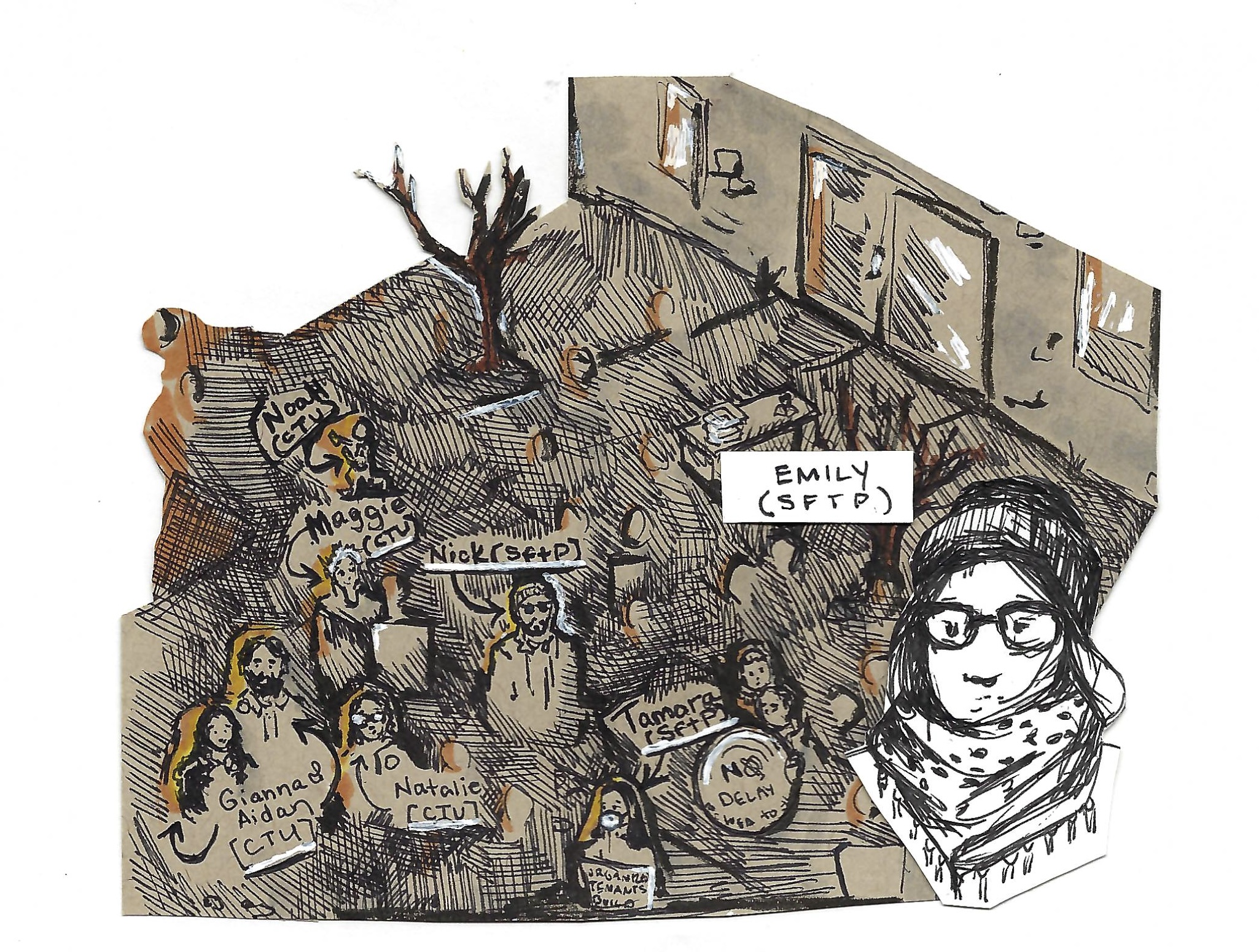
All the artwork above are collectively credited to Tamara R, Katy S, and Lily F. Spot illustrations are inspired by SftPer Matteo Farinella’s original design.
Acknowledgements
This project was truly a group effort of the Lead and Mold Working Contamination group and we would like to thank all members, especially Tamara, Josh, Malcom, and Lily for their contributions to data cleanup, analysis, methodology, and graphics. We benefitted greatly from early conversations with comrades in the broader SftP organization including Edward Millar and the Western Mass chapter including Sigrid Schmalzer. We would also like to thank Tatiana Cheeks for coordinating the donation of air purifiers to protect tenants from mold.
SftP-NHV and Cargill Tenants Union, Instagram post, February 29, 2024.
Trent McDonald and Jewel Tomasula, “STEM Organizing in Waves: A Macro and Micro View,” in Organize the Lab: Theory and Practice, ed. Science for the People (Knoxville: People’s Science Network, 2022).
This statement was originally posted on the main Science for the People website by the SftP Steering Committee and is reproduced here.
As all of us mourn the lives lost to the latest upsurge of violence, how do we appropriately understand what has been happening in the past few days in Gaza?
Israel’s National Security Minister, an ultra-nationalist instigator of violence convicted eight times including on charges of rioting and supporting a terrorist organization, once prohibited from serving in the Israeli military, is now in command of its security apparatus.
Israel’s Finance Minister declared the intent “to be cruel,” spoke of Palestinians as “human animals,” and enunciated the plan to deprive Gaza of food, fuel, and water.
Gaza, an open-air prison under siege by the extreme-right Israeli state since 2007, home to two million people, half of them children, is now under nonstop aerial bombardment that exposes the people and environment to toxic chemicals like white phosphorus.
Israel’s Prime Minister made clear its government’s aim of emptying out 1.1 million Palestinians in northern Gaza, which he claims is “only the beginning.”
This is a premeditated massacre and cleansing of an Indigenous population.
The governments of the United States, United Kingdom, France, Italy, and Germany all quickly pledged their “steadfast and united support” of Israel, whose leaders are now stepping up their implementation of genocide.
Such historic injustice has not occurred in isolation. It is the culmination of a century-long Zionist project facilitated by the capitalist class across the Global North: through the military-industrial war machine that profits from dispossession and destruction of Palestinian land; through the mainstream media that feed off dehumanizing the Palestinian people, erasing their history, and turning sentiments of humanity into pretexts for barbarity; through technoscientific development—which we as scientists and engineers are complicit in—funded by and funneled into bolstering the apartheid apparatus of Israel; as well as through the hypocrisy of Western academia, which, for all its professed values of “anti-racism” and “decolonization,” continues to acquiesce to settler-colonialism.
It is therefore our duty as members of Science for the People—an organization born out of the struggle against US atrocities in Vietnam, with predecessors who fought against apartheid South Africa, fascist regimes acrossLatinAmerica, and above all, US imperialism—to take concrete steps in this dark moment and plant the seeds of revolutionary change.
1) As scientists, we must inform our politics through deep and thorough analyses of history, circumstances, and structures. The struggle against colonization has always been fought by people of all ethnicities and religions, and Zionism has historically been opposed by left-wing Jewish leaders, scientists, and activists. We stand unequivocally in solidarity with the Palestinian people and condemn the seventy-five plus years of Zionist crimes that led to this genocide.
2) As workers within the academic-industrial complex, the products of our labor are subsumed by systemic forces and co-opted for war, which prompts us to reflect on ourselves and the institutions we work for. How much funding has an institution received from foundations with explicitly Zionist aims, and does this correlate with the callousness toward Palestinian students in recent university statements on the events unfolding in Gaza? What techniques, ideology, or both concurrently (as in the attempted biologization of the Jewish race) have been developed in any given field of study, under constraints set by our own settler-colonial system, to uphold the status quo? How has the notion of “progress” in the name of science been propped up by the Israeli state and its Western allies to mask the retrogression of their coloniality? This moment reveals the urgent need and opportunity to achieve a higher level of political consciousness among scientists. We must accelerate this process.
3) As activists and organizers, reflection on our complicity barely reaches the minimum of what’s required. What can we do as an organization to materially support the Palestinian cause? What can we contribute to our coalition partners at the frontline that are weathering racist and Orientalist abuses? How to resist the appropriation of science and technology by the colonizers? Within academia, we witness pro-Palestine voices being drowned out and those that dare speak out against genocide being prosecuted, fired, or silenced at the behest of political and economic interests of the Israeli apartheid state and transnational corporations that profit from the Occupation. How do we connect our own class struggle against the academic-industrial complex with local advocacy for Palestinian rights and the global liberation movements? There is an urgent need and opportunity to educate, agitate, organize, protect those who speak the truth, push back against Zionism, build labor militancy and internationalism among oppressed classes.
The Palestinian struggle is our struggle. Radical science demands of its practitioners clarity of thought and courage for action. SftP calls on all members and supporters to collectively pursue concrete strategies toward the liberation of Palestine.